What it is like to live with
The Slaw Devices Crosswind pedals are widely regarded as some of the best rudder pedals available for flight simulation enthusiasts who demand precision, durability, and customization.
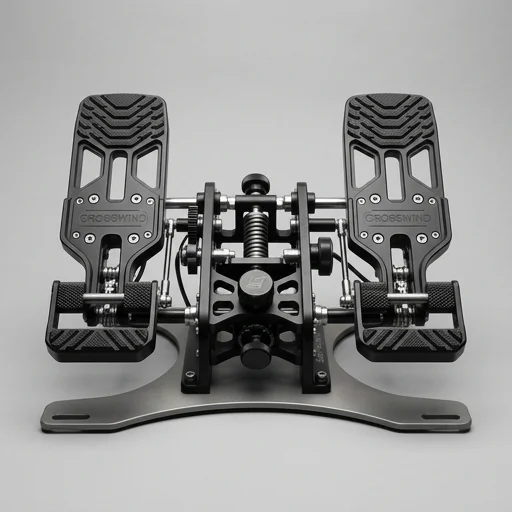
The Slaw Devices Crosswind Pedals stand apart in the flight simulation hardware world as a rudder pedal system built by enthusiasts who wanted something closer to the feel of a real aircraft than the mass-market offerings could provide. Constructed from machined aluminum and steel components rather than plastic, the pedals carry a substantial weight and rigidity that translates into a planted, authentic feel under foot. Each pedal travels on a long, smooth arc with contactless magnetic Hall-effect sensors driving the input, eliminating the wear, play, and signal noise that plague potentiometer-based designs. The result is a rudder axis that responds with fine, linear precision, letting pilots hold a heading on final approach or counter a gusting crosswind with the kind of subtlety that cheaper pedal sets simply cannot replicate.
Beyond the core rudder axis, the Crosswind Pedals include independent toe brakes for each foot, allowing differential braking that is essential for realistic taxiing, rejected takeoffs, and tight ground maneuvering in tailwheel or multi-engine aircraft. The brake pedals use their own adjustable spring tension and travel, so users can tune the resistance to match personal preference or the specific aircraft being flown, from light general aviation types to heavier airliners in addon aircraft. A toe-in adjustment and sliding rudder bar accommodate different leg lengths and stances, while the overall footprint is designed to bolt securely to a cockpit frame or sit anchored on the floor beneath a desk, resisting the shifting and sliding that can throw off fine control inputs during intense flying sessions.
Aimed squarely at serious simmers building out dedicated cockpits, the Crosswind Pedals are typically sold in kit form or semi-assembled, reflecting the brand's roots as a smaller, passion-driven manufacturer rather than a high-volume consumer electronics company. They connect over USB and are recognized natively by Windows as a standard joystick device, making them compatible with the major simulation platforms including Microsoft Flight Simulator, X-Plane, Prepar3D, and DCS World without special drivers. Pilots who fly tailwheel aircraft, practice crosswind landings, or simply want rudder and brake inputs that hold up to hundreds of hours of use tend to gravitate toward this pedal set specifically because of its combination of mechanical durability, sensor accuracy, and the kind of tactile feedback that makes a simulated runway feel like it has real weather pushing against it.